
Snitchnotes Team
How to Study Intertextuality With a Connection Map
How to Study Intertextuality With a Connection Map
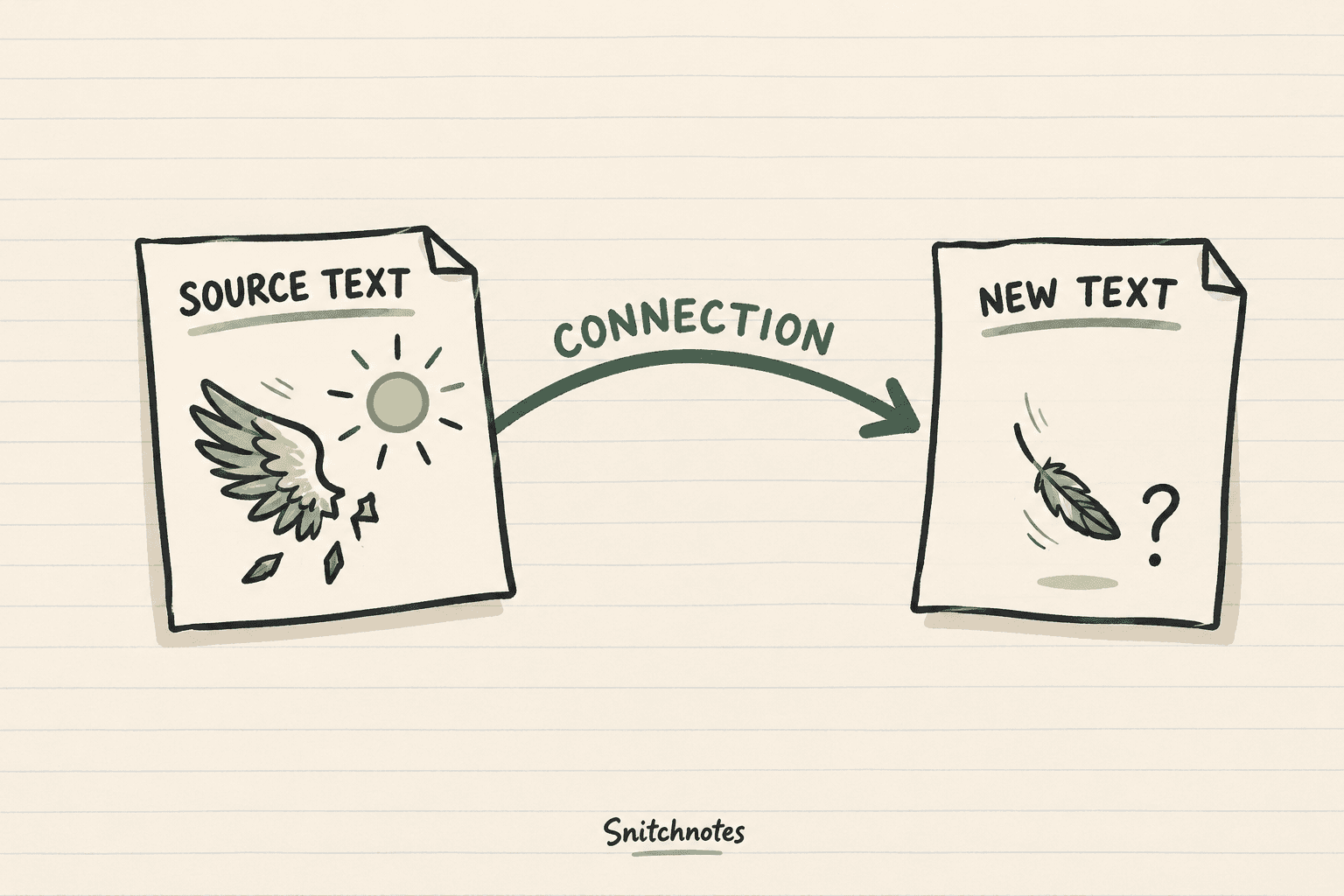
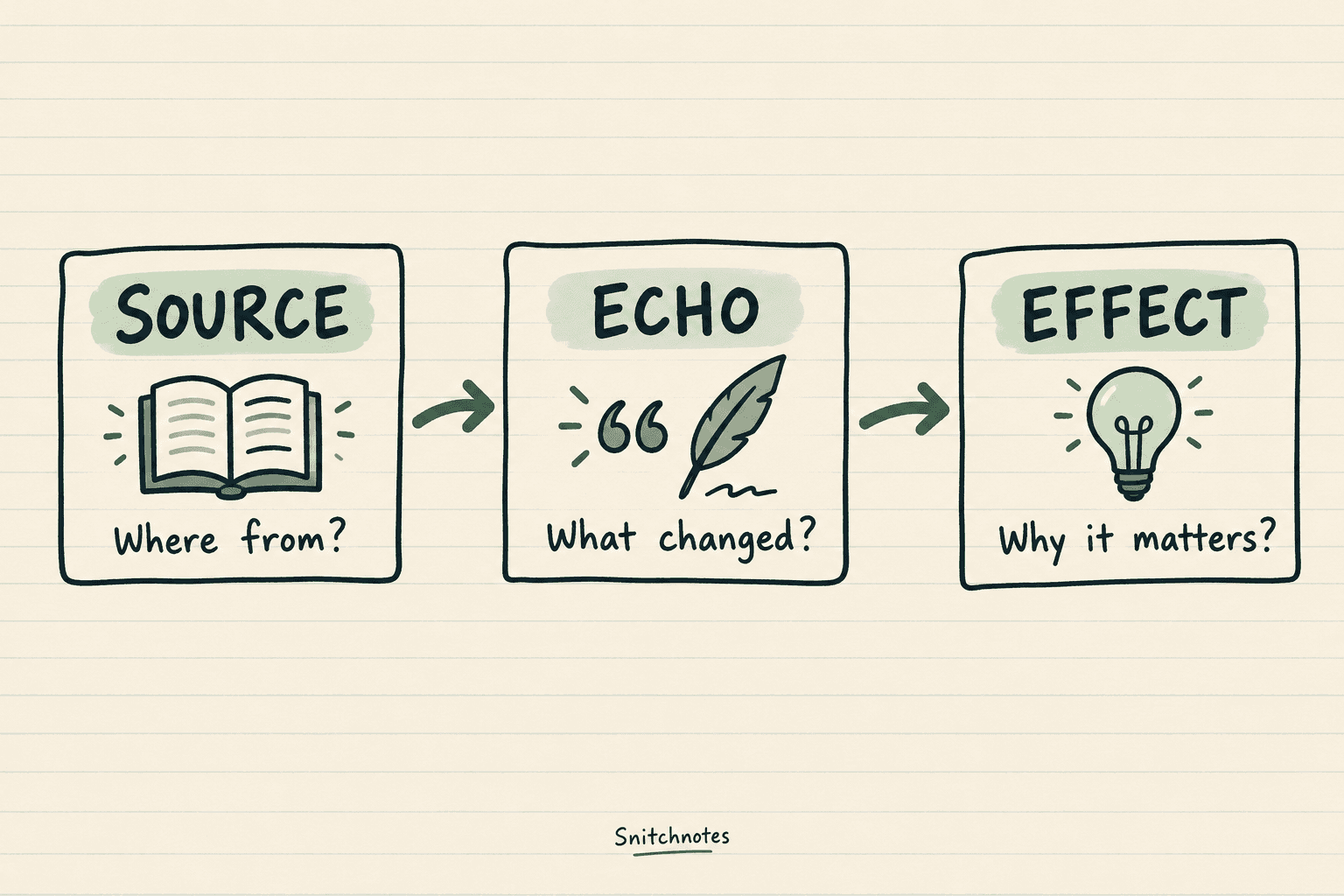
To study intertextuality, make a three-part connection map: name the source text, mark the exact echo in the newer text, and explain the effect of the connection. Do not stop at “these are similar.” Identify whether the newer text quotes, alludes to, parodies, or adapts the source, then ask what it keeps, changes, or challenges.
This method is useful for students preparing close-reading essays, literature exams, or seminar discussions. It turns a vague spot-the-reference exercise into an argument you can support with evidence. The basic unit is simple: source, echo, effect.
What intertextuality means
Intertextuality is the way one text gains meaning through its relationship with other texts. A “text” can be a poem, novel, film, speech, song, myth, or another meaning-making work. The relationship may be obvious, as when a novel quotes a famous line, or indirect, as when a scene repeats the pattern of an older myth without naming it.
The connection matters because readers bring knowledge of the source into the newer work. A reference to Icarus can carry ideas about ambition, warning, flight, failure, or the cost of ignoring limits. Yet the newer text is not forced to repeat the myth's lesson. It may admire the attempt, criticize the warning, shift attention to a bystander, or place the fall in a modern setting.
Build a source-echo-effect connection map
Divide a page into three columns. Use one row for each possible connection. Write briefly at first; you can turn the strongest row into a paragraph after you have tested it.
- Source: Name the earlier work, story, genre, or familiar phrase. Record the relevant event or wording, not the whole plot.
- Echo: Copy the precise signal in the newer text. It might be repeated wording, a name, an image, a plot pattern, a character role, or an imitated style.
- Effect: Explain what the connection makes the reader notice. State what the newer text preserves, transforms, reverses, mocks, or questions.
The third column does the real analytical work. “This resembles Icarus” is an observation. “By giving the falling figure a second attempt, the poem changes the myth from a warning about excess into a question about resilience” is an interpretation.
Identify the type of intertextual relationship
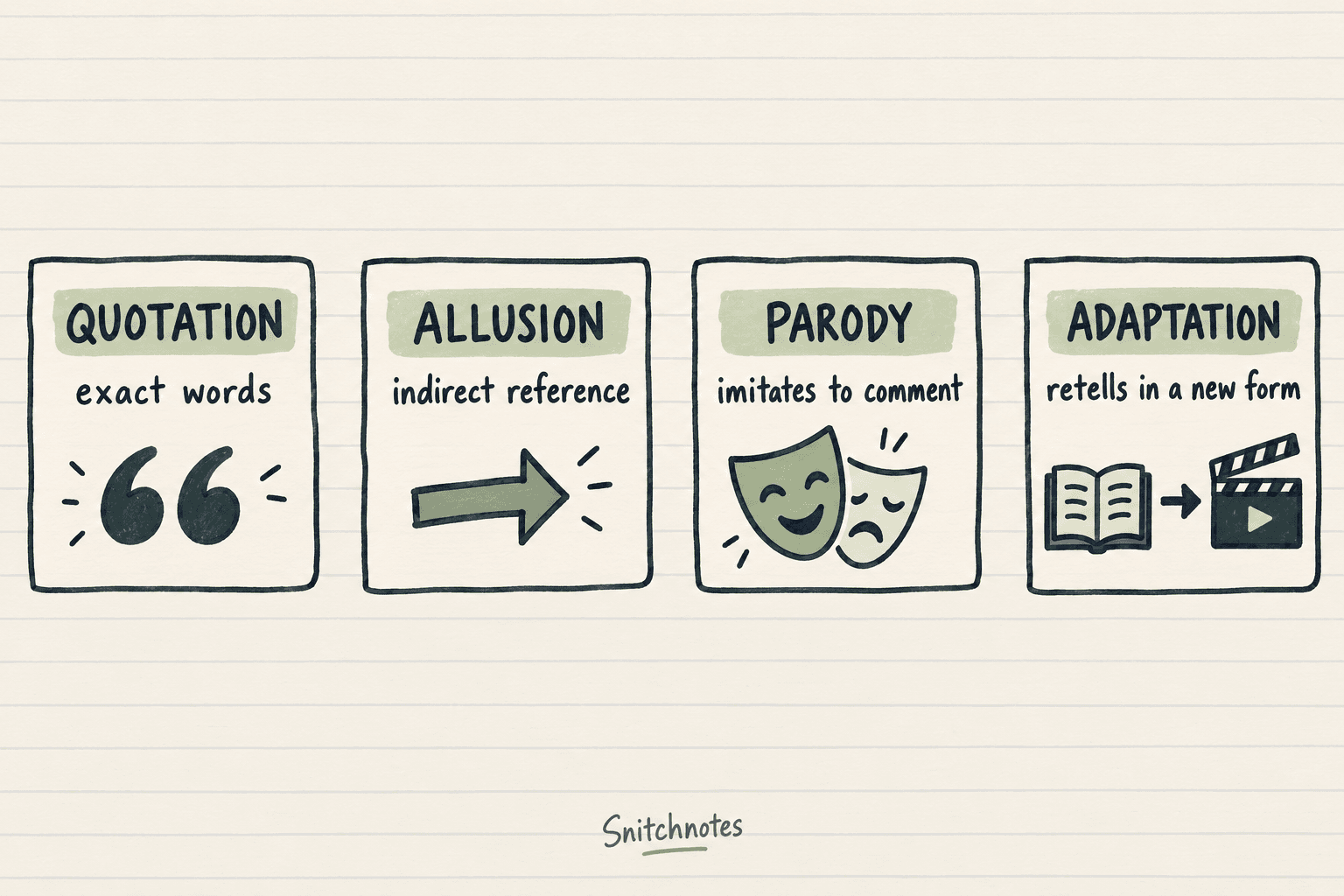
Use these four labels as working categories, but let the evidence decide. A single work can use more than one relationship at once.
- Quotation: the newer text repeats exact words and usually marks or attributes them in some way. Compare the quotation's original context with its new one.
- Allusion: the newer text refers indirectly to a known person, event, story, or work and expects the reader to supply part of the connection.
- Parody: the newer work imitates recognizable features of another work, author, or genre to create comic, critical, or satirical commentary.
- Adaptation: the newer work substantially retells or reworks a source, often in a different form, setting, culture, or period.
Labels are tools, not the final answer. Calling something an allusion is useful only if you also explain why that allusion was chosen and how it changes your reading.
Worked example: two modern echoes of Icarus
Imagine two fictional modern poems. Poem A says, “Icarus checks the weather app before he flies.” Poem B never uses his name; it shows wax on a rooftop, feathers in a train station, and a speaker who keeps looking toward the sun. These invented lines are study examples, not quotations from published poems.
For Poem A, the source is Ovid's account of Daedalus and Icarus in Metamorphoses. The echo is explicit: the poem names Icarus and updates his preparation with a phone app. The relationship is an allusion rather than a quotation because it invokes the myth without repeating Ovid's wording. The effect may be comic, but it also shifts responsibility. Does better information prevent reckless action, or can someone ignore a warning even with perfect forecasts?
For Poem B, the source is still the Icarus story, but the signal is indirect. Wax, feathers, falling, and the sun form a cluster of clues. The effect could be uncertainty: the poem makes readers reconstruct the myth themselves, so recognition becomes part of the experience. If the speaker watches rather than falls, the poem may also move attention from the famous risk-taker to the people who witness a preventable failure.
A strong comparison would not claim that every sun or feather is automatically Icarian. It would ask whether several specific clues converge, whether the surrounding language supports the link, and whether the connection produces an interpretation that fits the whole poem.
Common mistake: treating similarity as proof
Two texts can share rain, mirrors, journeys, or jealous siblings without one referring to the other. Similarity becomes a plausible intertextual connection when the evidence is distinctive enough, repeated enough, or close enough in wording and structure to reward the comparison. Context matters too: a direct title, epigraph, character name, or acknowledged source makes the case stronger.
Use cautious language when the link is uncertain: “echoes,” “recalls,” or “can be read alongside” may be more accurate than “is based on.” Then test the effect. If the proposed source does not clarify a choice in the newer text, you may have found a coincidence rather than a useful connection.
Turn the map into an essay paragraph
Write the paragraph in the same order as the map. First make a claim about the effect. Next present the echo as textual evidence. Then identify the source and the relationship type. Finally compare what changed and explain why the change supports your claim. This order keeps the source from taking over the paragraph: your subject is the newer text's use of the connection.
When reviewing, cover the relationship label and retrieve it from the evidence. Then cover the effect and explain it aloud. If your notes only let you remember a source name, add a “so what?” question to every row. Snitchnotes can turn your own readings, lecture slides, and notes into quizzes or flashcards built around those source-echo-effect prompts.
Check your understanding
A novel repeats an earlier poem's exact line. What should you compare?
Treat it first as a quotation. Compare who speaks the words, what surrounds them, and whether the new context preserves, reverses, or complicates the line's earlier meaning.
Why is naming the source not enough?
Identification answers where the connection comes from. Literary analysis must also explain the effect: what the newer text asks readers to notice, rethink, or feel because that source is present.
How can you test a possible allusion?
Collect the exact clues, check them against the proposed source, and read the surrounding passage. Prefer a cluster of distinctive signals over one generic similarity, then ask whether the connection improves your interpretation of the whole passage.
Related concepts
- Denotation vs connotation: separate a word's literal meaning from the associations a reference may carry.
- Primary vs secondary sources: distinguish the text you are analyzing from scholarship that helps you interpret it.
- Close reading: support an interpretation with precise choices in wording, form, structure, and context.
Sources
Purdue Online Writing Lab: Literary Terms
Massachusetts Institute of Technology Classics: Ovid, Metamorphoses, Book VIII
Convierte tus clases en material listo para el examen.
Apuntes, quizzes, podcasts, flashcards y chat — con solo subir un archivo.
Prueba tu primer apunte gratis